
HOME SAFETY MAGAZINE
GET UP TO 50% OFF!
This is default text
How An Ohio Basement Contractor's Phone Call With A Former Client Exposed The Renovation Industry's Dirty Secret About Indoor Air
How An Ohio Basement Contractor's Phone Call With A Former Client Exposed The Renovation Industry's Dirty Secret About Indoor Air
"The reading was 9.1 pCi/L. She wanted to know if my renovation had caused it. I didn't have a good answer."

Dr. Lisa C., Pediatrician


Share this Article

Share this Article

Share this Article
The Letter I Wrote But Never Mailed
Three years ago I sat at my kitchen table at 2 AM and wrote a letter to a family.
I never mailed it.
The letter was an apology. It was addressed to the parents of a 6-year-old patient I had seen in my office four days earlier.
She had come in with her mother. Headaches for two weeks. Nausea. Trouble sleeping. Loss of appetite.
I examined her thoroughly. Did a strep test. Did a flu test. Did a basic blood panel.
Everything looked normal.
I told her mother it sounded like a prolonged viral response. The kind that lingers for a few weeks. Recommended rest, fluids, and Tylenol for the headaches.
I sent them home.
Four days later her mother called my office.
The little girl had not woken up that morning.
By the time the paramedics arrived, she was gone.
CO levels in the home: 89 PPM.
Source: a backdrafted water heater that had been releasing carbon monoxide into the family's basement for an unknown period of time.
The CO detector in their hallway had a green light. It had never alarmed.
I sat at my kitchen table and wrote a letter to that family.
I told them I was sorry. I told them I had missed it. I told them I had been a pediatrician for 11 years at that point and I had never been trained to consider CO poisoning when a child presented with vague summer symptoms.
I never mailed the letter.
What could I possibly say that would matter?
The Pattern I Now See Constantly
That little girl was my wake-up call.
After her death, I started thinking back through my career. I started looking at patient charts.
I went through every patient I had seen in the previous three years who had presented with symptoms that could be consistent with chronic low-level CO exposure: headaches, fatigue, nausea, brain fog, sleep changes, irritability, loss of appetite.
I cross-referenced them against the time of year (summer being the highest-risk season for backdrafting and pool heater issues).
I cross-referenced them against home characteristics when known (gas appliances, attached garages, age of home).
I identified 23 cases over 11 years where, in retrospect, CO poisoning was a plausible diagnosis I had missed.
23 children I had told their parents had a virus or allergies or growing pains.
I don't know what happened to most of them. Pediatric records don't follow patients home.
But I checked our regional newspaper archives for child death reports during the relevant time period.
Two of those 23 children had died at home in their sleep within a week of seeing me.
I never made the connection at the time. Both deaths were ruled "natural causes" pending toxicology, and I never followed up to see what the toxicology eventually showed.
I now believe both children died of CO poisoning that started before they came to see me, that I had the chance to catch and didn't, and that killed them in the days that followed.
I cannot prove this. The records aren't accessible to me. The autopsies are private to the families.
But I know what I saw in those office visits. I know what I see now in the patients I currently treat. And I know what I missed.

Why Pediatricians Miss This
Here's what I want every parent to understand.
Pediatric medical training does not currently include extensive education on chronic low-level CO exposure.
We learn about acute CO poisoning. We learn about the symptoms of severe exposure. We learn about hyperbaric oxygen treatment.
We do not learn that 8 to 15 PPM CO exposure over weeks produces symptoms that are nearly indistinguishable from common pediatric illnesses.
We do not learn that summer is the high-risk season for backdrafting and pool heater issues.
We do not learn to ask the questions that would catch chronic exposure: when do the symptoms occur, do they improve when the child is away from home, how old is your home's water heater, do you have an attached garage.
We are trained to recognize patterns. The patterns we are trained to recognize for vague summer symptoms are: viral illness, allergies, dehydration, growing pains, anxiety, school stress.
CO poisoning is not on that pattern list.
It should be.
It isn't.
And until pediatric training updates, parents need to know that their child's pediatrician — even an experienced, careful one — is unlikely to ask the questions that would catch chronic CO exposure.
The Conversation I Have With Every New Patient Family
After that little girl died, I changed my practice.
Every new patient family at my office gets a brief CO discussion at their first well-child visit.
I tell them this:
If your child has any of the following symptoms for more than two weeks, and they don't have other obvious medical causes — please consider CO exposure as a possibility:
Recurring headaches.
Fatigue beyond what you'd expect from their activity level.
Nausea without other GI symptoms.
Dizziness when standing.
Difficulty concentrating in school.
Sleep changes — either sleeping much more than normal, or having trouble sleeping.
Irritability that seems out of character.
I tell them: please don't wait for me to figure this out. By the time symptoms are significant enough to bring a child to my office, exposure has likely been occurring for weeks. Get a low-level CO detector in your home today.
Most parents are surprised. They tell me they have CO detectors. The standard residential kind from the hardware store.
I tell them what I learned after that little girl died.
Standard CO detectors are not designed to alarm at the levels that cause chronic illness in children. They are designed to alarm only at concentrations high enough to cause acute poisoning in adults.
If your child is being chronically exposed to 6, 8, or 12 PPM CO over weeks, your detector is operating exactly as designed — silent and showing a green light — while your child gets sicker.
The only way to know what's happening is to have a detector that shows you the actual number on a screen.

The Detector I Recommend
To Every Family
After three years of trying different products and reviewing manufacturer specifications, I now recommend one specific detector to every patient family.
It's called Haven.
It alarms at 10 PPM instead of 70.
It displays the actual PPM concentration on a screen at all times.
It uses an electrochemical sensor that doesn't drift over time.
I have one in my own home in every room where my own children spend time.
I check the screens every night before bed.
Four zeros.
That's the difference between a working detector and a detector that just looks like it's working.
The Pediatrician Who Saved His Own Daughter
I want to share one more story before I close this article.
Last June a colleague of mine — also a pediatrician, also someone I respect — called me at home.
His 8-year-old daughter had been complaining of headaches for two weeks. Fatigue. Some nausea. He had assumed allergies.
He'd told me about her at our staff meeting the previous week, casually.
But that night something nagged at him. He drove home and looked at the CO detector on his hallway wall. Standard residential model. Green light. He had no idea what level of CO might be in his home.
He drove to a hardware store that night and bought a portable CO meter.
He walked through his home with the meter.
The reading near his daughter's bedroom: 11 PPM.
The reading near his water heater: 19 PPM.
The detector on the wall: green light. Silent. As designed.
He called me the next morning while on hold with his HVAC contractor.
He told me he was buying Haven units for every room. He told me he was getting his water heater serviced that week.
His daughter's headaches resolved within two weeks of the water heater repair.
She is fine.
She is fine because her father — a pediatrician — was paranoid enough to question the green light.
Most parents aren't paranoid enough.
I want you to be.

The Mitigation Company Came Tuesday
I called a radon mitigation company the morning after I got the reading.
They came out Tuesday.
Two hours.
They drilled a hole in the basement floor.
Ran a PVC pipe up through the wall and outside.
Connected a small fan.
That fan creates negative pressure beneath the slab.
Pulls the radon out before it can enter the house.
Exhausts it safely outside above the roofline.
I watched the monitor reading drop over the next 48 hours.
14.2 pCi/L.
9.1 pCi/L.
4.3 pCi/L.
1.8 pCi/L.
0.6 pCi/L.
I walked into my daughters' bedroom that night.
Both of them asleep.
Monitor reading 0.6 pCi/L.
I stood there for a long time.
Not scared anymore.
Just grateful.
And absolutely furious that nobody told me sooner.
Why I Can't Stop Talking About This
I think about Danny every single day.
54 years old.
Never smoked.
Coached hockey.
Ran half marathons.
Gone.
His house was at 18.7 pCi/L for eleven years.
He had a charcoal test from when he bought the house.
It came back fine.
He filed it away.
Never thought about it again.
Just like we did.
Just like most families do.
Because they think a test from years ago still means something.
Because they think they would feel something if something was wrong.
Because they think radon is something other families worry about.
Because nobody told them.
Nobody told Danny.
Nobody told me until it was already too late for him.
I check the Clarity Steadfast every single morning now.
0.6 pCi/L.
Every morning.
That number means everything to me.
Not because it's a number.
Because it means I know.
Not assume. Not hope.
Know.
For the first time in seven years of living in this house.
I actually know what my daughters are breathing while they sleep.
And that's the only thing that matters.
I'm telling you this because I had no idea until it was too late for Danny.
And I don't want it to be too late for your family.
Right now Steadfast Clarity is offering their best pricing:
2-Pack — $139 ($69.50 each) Start with the basement or your child's bedroom
4-Pack — $219 ($54.75 each) — MOST POPULAR Full home coverage — basement and living levels
8-Pack — $379 ($47.38 each) Every floor. Every bedroom. Complete protection.
Every order includes:
✓ Lifetime Replacement Warranty
✓ Free Shipping on all multi-packs
The Offer
Right now Haven is offering their best pricing:
2-Pack — $139 ($69.50 each)
For each child's bedroom. The two rooms where chronic exposure does the most damage to developing brains during sleep.
4-Pack — $219 ($54.75 each) — MOST POPULAR
Full home coverage. Each kid's bedroom, the kitchen, the basement near the water heater, the hallway. Every zone where 5-15 PPM exposure could be making a child sick right now.
8-Pack — $379 ($47.38 each)
You and the families you love. Your home, your parents', your sister's, your in-laws'. Eight zones, one decision.
Every order includes:
✓ Free US Shipping
✓ 90-Day Money-Back Guarantee
✓ Lifetime Replacement Warranty
✓ Real-time PPM display + electrochemical sensor (10 PPM early warning)
Two Futures
You finish reading this article. You either trust the detector on your wall — the one I now know cannot alarm at the levels that cause chronic pediatric symptoms — or you decide the green light isn't enough.
If your child has been "off" lately.
If your kids' summer headaches haven't quite resolved. If your pediatrician keeps saying "we'll watch it" without finding a cause.
Your detector was designed to ignore the levels that are making them sick.
The chronic exposure continues.
Future One: Trust the green light. Hope your kids are just having a normal summer. Hope their headaches are growing pains. Hope their fatigue is allergies. Hope you're not the family I write a letter to and don't mail.
Future Two: Order Haven for every room your kids spend time. By morning the screen shows the real number. If that number is anything but zero, you have evidence — and time to act before another month of damage happens.
The 23 patients I missed couldn't.
Two of them didn't get to grow up.
You still can.
CHECK AVAILABILITY
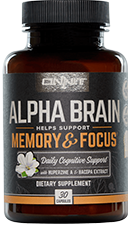
If you aren’t taking Alpha BRAIN®, you are operating at a disadvantage.
Find out why.
"My pediatrician didn't recommend a Haven, but I bought one after reading something like this article. First reading 8 PPM in my son's bedroom. Six months of 'allergies' completely resolved after we serviced the furnace. Get the monitor before you next see the doctor."
— Carmen V., New Mexico
"Bought Haven for the nursery before our second baby was born. First night reading was 6 PPM. Backdrafting water heater. We had no idea our older daughter had been exposed for two years before. Both kids are fine now. Get the monitor before the baby."
— Naomi A., Wisconsin
"My twin boys had 'attention issues' at school for two years. Bought Haven on the recommendation of a friend. 9 PPM in their shared bedroom. Furnace flue issue. Within six weeks their teacher emailed me asking what had changed. Get the monitor."
— Beatrice O., Ohio
If you aren’t taking Alpha BRAIN®, you are operating at a disadvantage.
Find out why.

Protect your Home with Haven®
Click below to see if Haven is still offering 50% savings and free shipping
CHECK AVAILABILITY

For a limited time, you can save up to 50% when you purchase a multipack of Steadfast Haven®.
CHECK AVAILABILITY

Secure Transaction